

















January gyms fill up with resolutions. The lifters who walk in bigger by March started months earlier.
Winter is the off-season. Training volume can climb. Summer is far away. A few extra pounds under a hoodie cost you nothing. That makes the next 12 to 16 weeks the best window of the year to add real size.
The problem: most winter bulks turn into winter fat gain. "Eat everything" works for a month, then you spend spring dieting off what you put on. This guide runs on numbers instead. One calorie target. One weekly scale target. One clear rule for when a mass gainer earns a spot in your day.
Clean Bulk vs. Dirty Bulk
A clean bulk is a controlled surplus. A dirty bulk is an uncontrolled one. Both add weight. Only one adds weight you want to keep.

How Many Calories to Bulk
hort answer: maintenance plus 10 to 20 percent. That range comes from a 2019 review of off-season bodybuilding nutrition, which pairs it with a weekly gain target. More on that below.
Step 1: Find maintenance. Eat normally and log food and bodyweight for 14 days. If your weight holds steady, your daily calorie average is maintenance. No time to test? Bodyweight in pounds x 15 is a rough starting point.
Step 2: Add the surplus. Newer lifters can work the top of the range. The more years you have under the bar, the closer to 10 percent you start. Advanced lifters build muscle slower, so extra calories past that point mostly land as fat.
Step 3: Round it. Pick a number you can hit every day, not a range you drift around in.

Your Weekly Weight-Gain Target
Aim for 0.25 to 0.5 percent of your bodyweight per week. Same review, same logic: fast enough to see on the scale, slow enough that most of it is muscle.

Weigh in daily. Judge weekly. Step on the scale every morning, after the bathroom, before food. Water, salt and carbs swing your weight a few pounds day to day. The weekly average is the number that counts.
Adjust every two weeks.
-
Under target two weeks running: add 150 calories a day.
-
Over target: cut 150 calories a day.
-
On target: change nothing.
Run it for 12 weeks at half a pound a week and you are up 6 lb by spring. That beats 15 lb you have to diet back off.
Set Protein First, Then Fat, Then Carbs
Calories decide whether you gain. Macros decide what you gain.
-
Protein: 0.7 to 1 g per pound of bodyweight. Spread it across 4 to 5 meals.
-
Fat: 0.5 to 1.5 g per kilogram of bodyweight, per the 2019 review.
-
Carbs: everything left. You need at least 3 to 5 g per kilogram to cover heavy training volume.

Carbs carry the bulk. They cover the sessions that make the surplus worth eating.
Mass Gainer vs. Whey Protein
Whey is a protein tool. A gainer is a calorie tool. Pick the one that closes your gap.

A gainer makes sense when:
-
You land 300+ calories short most days and can't fit more food.
-
Your appetite drops as training volume climbs.
-
You burn a lot outside the gym: a physical job, a second sport, long days on your feet.
-
Your schedule has no room for a fifth meal.
Whey is enough when: you already hit calories, you only miss protein, or you gain weight easily.
Scale the scoop. A gainer is a measured meal, not a full-serving rule. If your gap is 500 calories, take the part of a serving that covers 500. Then let the scale tell you if it's working.
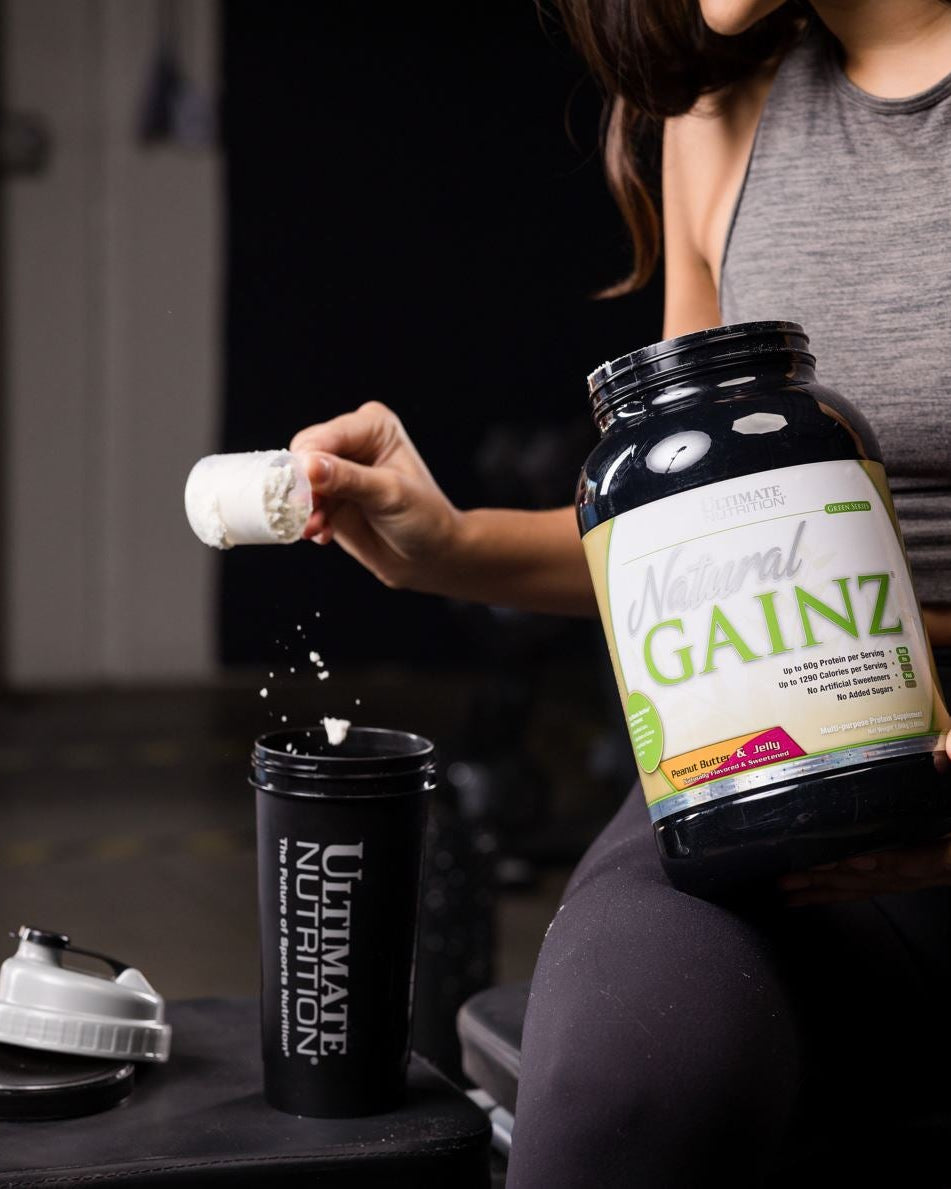
Shop the Winter Bulk Stack
For the biggest calorie gaps.
-
56 g protein from 8 protein sources
-
170 g time-release carbs
-
1,020 calories per 4-scoop serving
-
71% less sugar
-
Glutamine and digestive enzymes
How to use it on a clean bulk: 2 scoops covers about 510 calories, right in the middle of a typical surplus. Save the full serving for big frames and big gaps.
For the leaner bulk.
-
570 calories per serving
-
60 g protein from whey isolate, micellar casein and egg
-
60 g carbs, 8 g sugar
-
Creatine and glutamine built in
-
20+ vitamins and minerals
How to use it on a clean bulk: one serving is close to a 20 percent surplus for a 180 lb lifter. One shake, target hit.
For lifters who hit calories through food and only need the protein.
The Bottom Line
A winter bulk works when it runs on numbers. Maintenance plus 10 to 20 percent. A quarter to half a percent of bodyweight a week. Check the scale average, adjust every two weeks, repeat.
Whey covers protein. A gainer covers calories when food can't. Start before the calendar flips and you're weeks ahead of the resolution crowd.
Eat with a plan. Weigh in weekly. Grow all winter.
The information provided in our articles is meant for informational and educational purposes exclusively and should not be considered as medical advice. It is essential to consult a healthcare professional before starting a new nutritional product and/or making significant changes to your diet and exercise routine. These products are not intended to diagnose, treat, cure, or prevent any disease.