















Here's the mix-up hiding inside this question: whey isolate is a type of whey. When people ask "whey or isolate," what they usually mean is whey concentrate versus whey isolate, two different ways of processing the exact same starting ingredient. Once that's cleared up, the actual decision gets a lot simpler.
Both come from the same source and deliver the same essential amino acids. What changes is how far each one gets filtered, and that difference in processing is what ends up mattering for your goals, your budget, and your stomach.
What Makes Whey Concentrate Different From Whey Isolate
Both start as a byproduct of cheesemaking. Once the liquid whey is separated out, it gets filtered to concentrate the protein and remove excess water. Whey concentrate stops at basic filtration, landing around 70 to 80% protein by weight, with the rest made up of naturally occurring fat, carbohydrate (mostly lactose), and minerals.
Whey isolate goes a step further. Research on dairy processing describes an additional round of filtration, typically microfiltration or ion exchange, needed to strip out the remaining fat and lactose and push protein purity above 90%. That extra processing step is the entire reason isolate costs more and carries a leaner nutrition label.
Neither version is a different protein. Both are whey, built from the same amino acids, including the full essential amino acid profile that makes whey effective for muscle protein synthesis in the first place. What separates them is everything attached to that protein, not the protein itself.
Common Myths Worth Clearing Up
Myth: Isolate absorbs dramatically faster than concentrate.
Both are considered fast-digesting proteins compared to something like casein, and the gap in absorption speed between concentrate and isolate specifically is smaller than marketing suggests. Isolate's real advantage is what it leaves behind, not how fast it moves.
Myth: Concentrate is an outdated or inferior product.
Concentrate isn't a downgrade. It delivers the same essential amino acids as isolate, often at a lower price, and the extra fat and lactose it retains aren't automatically a problem unless you're specifically trying to minimize them. Plenty of serious lifters use concentrate as their everyday protein without any downside.
Myth: Isolate is completely lactose-free.
It's much lower in lactose than concentrate, but not zero. Most people with mild sensitivity tolerate isolate well. Anyone with a more significant lactose intolerance should still read labels carefully rather than assuming isolate is automatically safe.
Myth: A higher protein percentage always means more protein per serving.
Purity by weight and grams per scoop aren't the same thing. A concentrate-based product can still deliver a very competitive amount of protein per serving depending on scoop size and formulation. Check the actual grams of protein on the label, not just the percentage claim on the front of the tub.
Who Should Lean Toward Concentrate
Concentrate makes sense if you don't have a lactose sensitivity, you're not counting every gram of carbs or fat, and you want a reliable everyday protein without paying extra for filtration you don't need. It also tends to have a creamier texture and richer taste, which matters if you're drinking a shake daily and taste is part of what keeps you consistent. Budget-conscious lifters and anyone in a muscle-building phase where a few extra carbs and a bit of fat aren't a concern get the most value here.
Who Should Lean Toward Isolate
Isolate is the better fit if you're managing lactose sensitivity, tracking macros closely, or in a cutting phase where every gram of fat and carbohydrate competes for space in your daily targets. Physique and performance athletes who need maximum protein at minimum calories tend to gravitate here, as do people who've noticed bloating or digestive discomfort with concentrate-based products. If lactose has been an issue for you in the past, our post on why protein powder can cause bloating walks through what's usually behind it and how to fix it.
How Much Protein Either One Gets You
Most active adults land in the range of 1.4 to 2.0 grams of protein per kilogram of bodyweight daily to support muscle building and maintenance, and both concentrate and isolate contribute equally toward that number gram for gram. Neither form is inherently more "anabolic." The decision comes down to what surrounds the protein, not the protein itself.

Ultimate Nutrition's Lineup, Mapped to Each Type
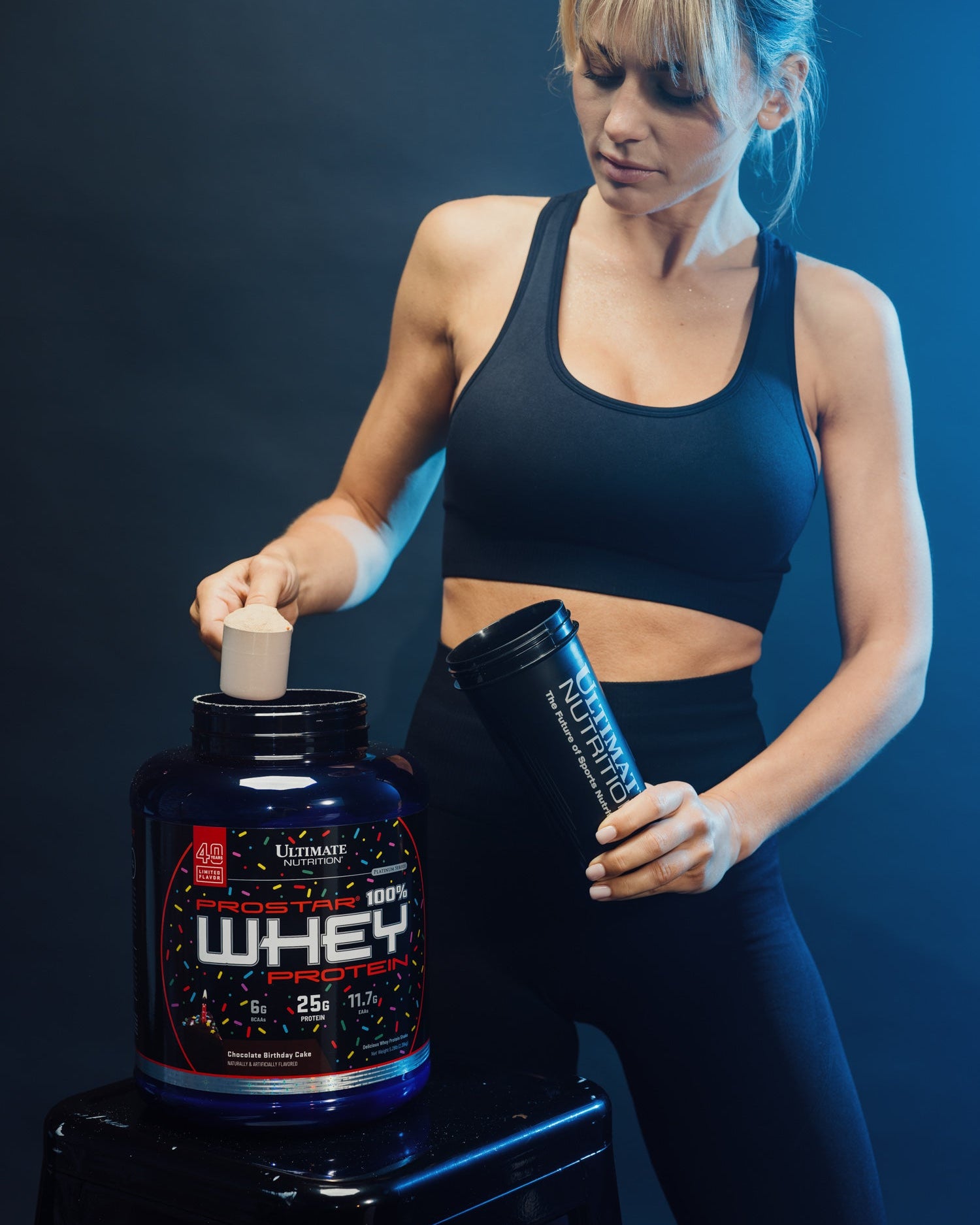
If you want a blend built around versatility: Prostar 100% Whey Protein combines whey isolate, concentrate, and peptides in one formula, delivering 25 grams of protein and over 6 grams of BCAAs per serving with only 2 grams of carbs. It's a practical middle ground for anyone who wants the benefits of both without picking a side.
If you want straight concentrate with nothing added: Prostar 100% Raw is unflavored 80% whey protein concentrate with no fillers or sweeteners, delivering 24 grams of protein per scoop. It's built for people who want total control over flavor and ingredients and don't need the extra filtration isolate provides.
If you want the leanest possible label: ISO Sensation 93 is 93% pure whey protein isolate, delivering 30 grams of protein at just 130 calories and 1 gram of carbs per serving. It's built specifically for anyone prioritizing a high protein-to-calorie ratio, whether that's for a cutting phase or simply keeping the rest of the day's macros open.
The Bottom Line
Whey concentrate and whey isolate aren't rival products competing for the same job. They're the same starting protein taken to different points in processing, and each one earns its place depending on your budget, your digestion, and how tightly you're tracking calories and macros. Start with what your goal actually requires, whether that's cost efficiency, a leaner label, or something in between, and let that decide which one belongs in your shaker.
The information provided in our articles is meant for informational and educational purposes exclusively and should not be considered as medical advice. It is essential to consult a healthcare professional before starting a new nutritional product and/or making significant changes to your diet and exercise routine. These products are not intended to diagnose, treat, cure, or prevent any disease.