












A deadlift can tell you how much weight you can pull from the floor. A mile time can tell you how efficiently you move. But one of the most revealing measures of physical strength fits in the palm of your hand.
Grip strength is easy to overlook because it does not feel as impressive as a one rep max or show up as clearly as a change in the mirror. Yet researchers routinely use handgrip strength as a practical indicator of physical function. Across large population studies, lower grip strength has been associated with poorer health outcomes and a higher risk of early death.
That does not mean your handshake predicts your future. Grip strength is a marker, not a diagnosis, and the relationship is not proof that stronger hands alone make you live longer. What it can offer is a useful window into how well your muscles, nervous system, and movement capacity are holding up over time.
Here is what grip strength may reveal about your health, how to test it, and how to build strength that serves you both inside and outside the gym.
Why Grip Strength Matters Beyond Your Hands
Your grip is produced by the muscles of your fingers, hands, wrists, and forearms, but it depends on much more than those smaller muscles. A hard squeeze also requires healthy joints, coordinated nerve signals, and enough total body stability to transfer force.
Think about the movements that challenge your grip:
-
Holding a heavy deadlift
-
Carrying dumbbells or grocery bags
-
Pulling your body through a row or pull up
-
Opening a stubborn jar
-
Catching yourself when balance fails
Grip strength sits at the end of all those movement chains. When it declines, the cause may be local, such as an injured hand or irritated nerve. It may also reflect a broader loss of strength, muscle quality, or physical capacity.
This is why handgrip testing appears so often in research on aging. It is quick, inexpensive, and gives researchers a repeatable measurement that often tracks larger patterns of health and function.
What the Research Says About Grip Strength and Longevity
One of the largest studies on the subject followed more than 500,000 adults between ages 40 and 69. Researchers found that every 5 kilogram decrease in grip strength was associated with a 16% higher risk of all cause mortality in men and a 20% higher risk in women. Lower grip strength was also associated with cardiovascular and respiratory outcomes.
Those numbers are significant, but they need context. The study found an association; it did not prove that weak hands caused disease or that grip training alone could prevent it.
A more useful way to interpret the research is this: grip strength can act like a physical status check. It may capture pieces of muscle strength, activity level, neurological function, nutrition, illness, and aging in one simple measurement. A low or rapidly declining result can be a reason to look more closely at the bigger picture.
If staying capable for decades is your goal, our guide to training for longevity explains how resistance training, mobility, cardiovascular work, and recovery fit together.
What Your Grip Can Tell You About Your Training
For athletes and lifters, grip strength is not only a health marker. It is also a performance signal.
Your Grip May Be Limiting Bigger Lifts
If your hands open before your back or legs fatigue, grip is the weak link. Deadlifts, rows, pull ups, carries, and many Olympic lifting variations depend on your ability to hold and control resistance.
Lifting straps can be valuable when the goal is overloading a larger muscle group without grip ending the set. But if straps are used for every pulling movement, they can hide a weakness that never gets addressed. Use them strategically, then train grip directly.
It Reflects More Than Muscle Size
Strength is not determined by muscle size alone. It also depends on how efficiently your nervous system recruits and coordinates muscle fibers. That is why someone can become noticeably stronger before gaining visible size.
This distinction matters when you are deciding how to train and recover. Our guide to hypertrophy versus strength training breaks down the different adaptations and the nutritional support that fits each goal.
A Downward Trend Can Flag Fatigue
One poor grip test does not mean much by itself. Sleep, soreness, a difficult workout, hand position, and even motivation can change the result. A consistent downward trend, however, may suggest that recovery or training load deserves attention.
The key is consistency. Test under similar conditions and look for patterns instead of reacting to one number.
How to Test Grip Strength
The most reliable practical tool is a hand dynamometer. It measures the force of your squeeze and gives you a result in pounds or kilograms.
A common testing approach looks like this:
-
Adjust the handle so it fits your hand comfortably.
-
Sit or stand tall with your shoulder relaxed and your elbow bent near 90 degrees.
-
Keep your wrist in a neutral position.
-
Squeeze as hard as possible for three to five seconds.
-
Complete two or three attempts on each side, resting briefly between efforts.
-
Record your results and use the same device and setup next time.
Norms vary substantially by age, sex, body size, testing position, and equipment. Instead of comparing your result with a random number online, establish your own baseline and watch the trend. A healthcare or fitness professional can help interpret a standardized test when needed.
No dynamometer? These gym based checks can still help you monitor progress:
-
Dead hang: Track how long you can hang from a pull up bar with controlled shoulders.
-
Farmer's carry: Record the weight and distance you can carry without losing posture or control.
-
Plate pinch: Time how long you can hold two smooth weight plates together with your fingers and thumb.
-
Heavy hold: Hold a loaded barbell at lockout for a consistent amount of time.
These are not clinical grip tests. They also involve body weight, technique, pain tolerance, and total body strength. Use them as repeatable training benchmarks, not medical assessments.

Three Types of Grip Worth Training
A complete grip program develops more than one way of holding resistance.
Crush Grip
Crush grip is the closing force between your fingers and palm. You use it when squeezing a hand gripper or gripping a dumbbell.
Train it with: Hand grippers, stress balls, or controlled towel squeezes.
Support Grip
Support grip is your ability to hold an object for time. It is heavily involved in deadlifts, pull ups, rows, and loaded carries.
Train it with: Farmer's carries, dead hangs, and heavy barbell holds.
Pinch Grip
Pinch grip involves holding an object between your fingers and thumb. It is often neglected in traditional strength programs.
Train it with: Plate pinches, block holds, and pinch grip carries.
Together, these qualities build a grip that is useful, balanced, and transferable to real movement. That is the same principle behind functional strength training: strength should improve what your body can actually do.
How to Improve Grip Strength Without Wrecking Your Workouts
Grip responds to progressive training like any other physical quality. The difference is that your hands and forearms already work during many upper body sessions, so more is not always better.
Start with two or three short sessions per week. Add grip work near the end of your workout so fatigue does not interfere with compound lifts.
Simple Grip Strength Workout
Farmer's carries: 3 sets of 30 to 45 seconds
Choose a load that challenges your hands without pulling your posture apart.
Dead hangs: 3 sets of 15 to 45 seconds
Keep your shoulders controlled rather than collapsing passively into the joint.
Plate pinches: 3 sets of 20 to 30 seconds
Begin with lighter plates and keep them clear of your feet.
Hand grippers: 2 to 3 sets of 8 to 15 controlled repetitions per hand
Use a resistance you can close through the full range without twisting your wrist.
Wrist extensions: 2 to 3 sets of 12 to 20 repetitions
Training the muscles that open and stabilize the wrist helps balance all the squeezing work.
Progress one variable at a time: slightly more resistance, a longer hold, greater distance, or an additional controlled repetition. If the quality of your grip or wrist position falls apart, the set is over.
Build the Body Behind the Grip
Direct hand training can improve a specific weakness, but longevity is not built from the wrists down. Your grip is most meaningful when it is part of a strong, active, well recovered body.
Keep Resistance Training
Rows, pull ups, deadlifts, carries, and other compound movements challenge grip while building the back, shoulders, hips, and legs. Train across a comfortable range of motion and increase resistance gradually.
Eat Enough Protein
Muscle repair requires amino acids, and total daily protein matters more than any single food or shake. Start with whole food sources and use supplementation when convenience helps you consistently meet your needs.
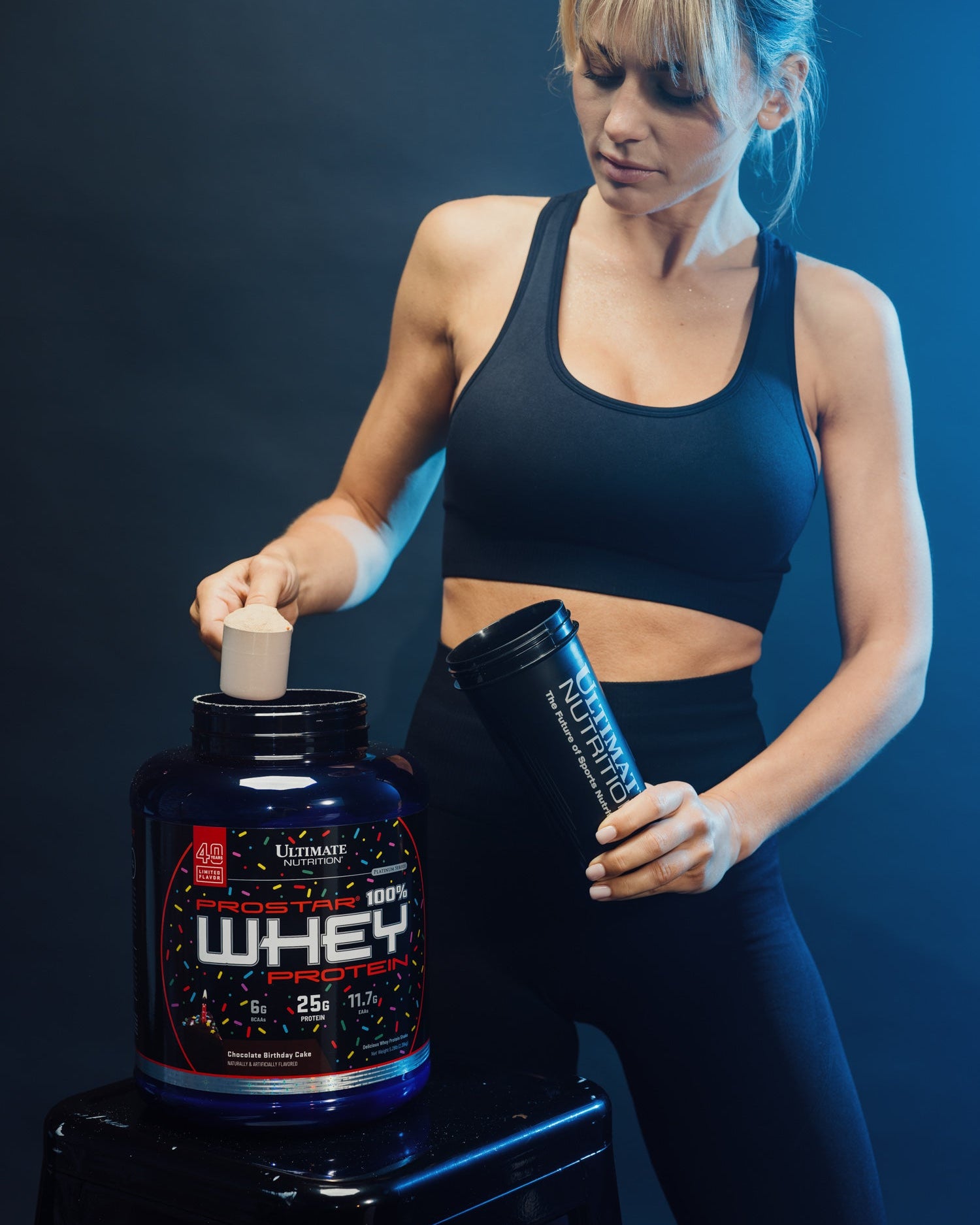
Prostar 100% Whey Protein provides 25 grams of protein and more than 6 grams of naturally occurring BCAAs per serving. It will not specifically strengthen your hands, but it can help support the muscle repair and growth produced by a well designed resistance training program.
Consider Creatine for Strength Training Support
Creatine helps replenish the energy system used during short, high intensity efforts. That can support greater training output and strength development over time when paired with consistent resistance training.
Ultimate Nutrition Creatine Monohydrate provides 5 grams of creatine monohydrate per serving. Like protein, creatine is not a grip specific shortcut and should not be treated as a longevity guarantee. Its role is to support the training that develops strength.
Respect Recovery
Your hands and forearms may be small, but they still need time to adapt. Persistent soreness, declining performance, or irritated elbows and wrists are signs to reduce volume rather than add another finisher.
For a closer look at how repair unfolds after training, read Muscle Recovery Timeline: What Happens in the First 72 Hours.
The Bottom Line
Strong hands help you lift, pull, carry, compete, and handle the physical demands of daily life. More importantly, maintaining grip strength often travels alongside the habits that support long term health: consistent resistance training, adequate nutrition, smart recovery, and regular movement.
Do not train your grip because you believe a stronger squeeze guarantees a longer life. Train it because the strength you can use is worth preserving, and because tracking it gives you one more way to understand how your body is performing over time.
Build the grip. Support the body behind it. Stay strong for the long game.
The information provided in our articles is meant for informational and educational purposes exclusively and should not be considered as medical advice. It is essential to consult a healthcare professional before starting a new nutritional product and/or making significant changes to your diet and exercise routine. These products are not intended to diagnose, treat, cure, or prevent any disease.