
















You're showing up. You're putting in the reps. You're taking it seriously – and yet the mirror isn't moving. The scale isn't moving. Your muscles aren't growing the way they should be.
If you've ever typed "why am I not gaining muscle" into a search bar at midnight, you're not alone. This is one of the most common frustrations in fitness, and the answer almost never comes down to genetics or effort. It comes down to the details most people are quietly getting wrong.
Here are the nine mistakes most likely killing your muscle-building progress – and what to do about each one.
1. You're Not Eating Enough
This is the most common reason muscles stop growing – full stop.
Muscle is a metabolically expensive tissue. Your body needs a caloric surplus to build it. Even a modest surplus of 250–500 calories per day above your maintenance level is enough to fuel meaningful gains. If you're eating at maintenance or in a deficit, you may be maintaining what you have, but you're not building new tissue.
Self-reported calorie intake is notoriously inaccurate. Most people underestimate what they eat – and more importantly, they underestimate what they burn. If you've been in the gym consistently for months without results, spend two weeks tracking your actual food intake before assuming anything else is wrong.
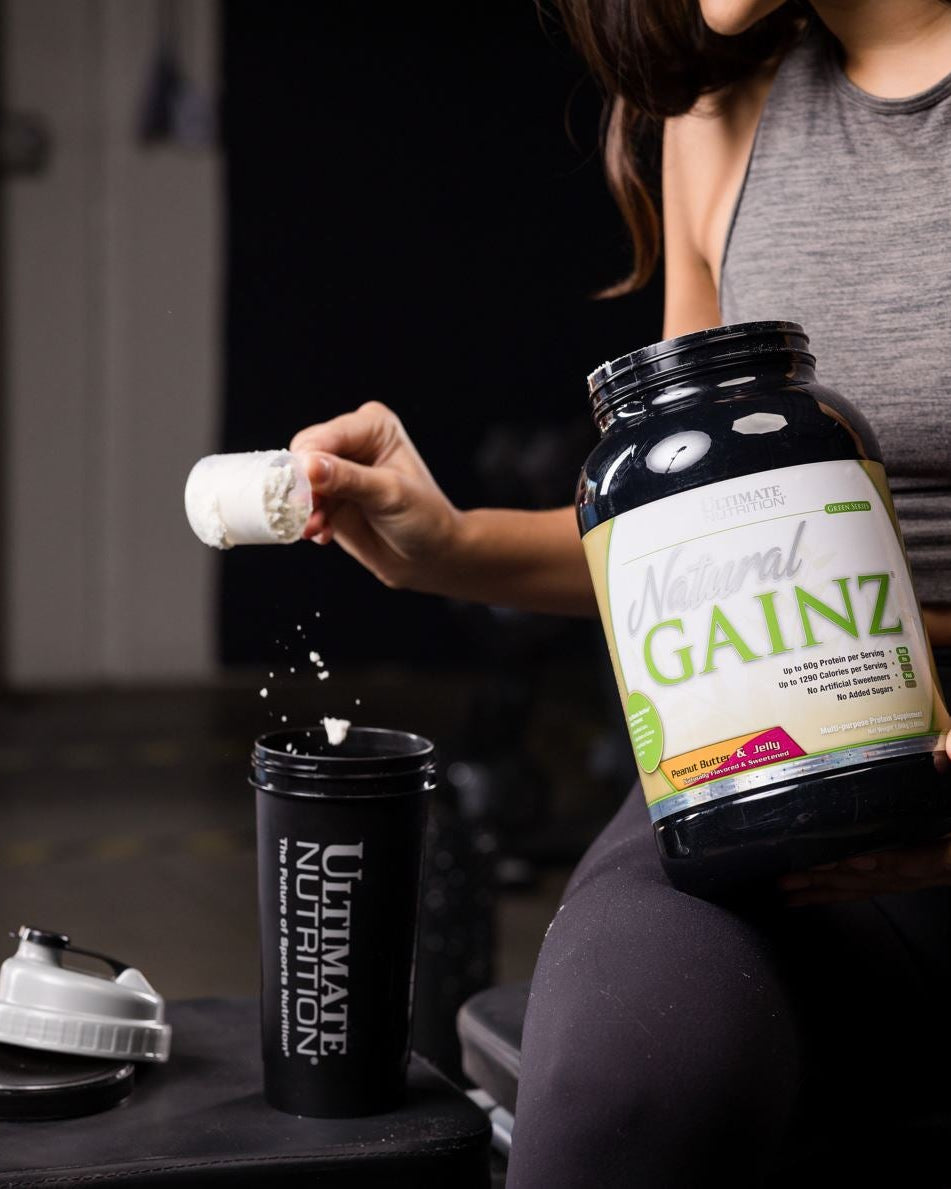
Hardgainer tip: If you genuinely struggle to eat enough whole food volume, a mass gainer like Muscle Juice® Revolution 2600 can help you close the calorie gap without forcing yourself through another plate of rice.
2. Your Protein Intake Is Too Low
Calories get you into a building environment. Protein is the raw material the building actually uses.
Research consistently points to 0.7–1 gram of protein per pound of bodyweight as the effective range for muscle synthesis in people doing resistance training. For a 175-pound person, that's anywhere from 123 to 175 grams per day. Most people – even those who think they eat "high protein" – fall well short of that.
Protein also has a distribution component. Your body can only use so much per sitting for muscle protein synthesis. Spreading intake across three to five meals throughout the day outperforms front- or back-loading in research on protein timing.
If you're not hitting your daily target from whole food alone, a quality whey protein fills the gap efficiently. ProStar® 100% Whey Protein delivers a clean, high-quality protein hit post-workout or between meals. For a higher-purity option, ISO Sensation® 93 provides 30g of protein per serving from 100% whey protein isolate with minimal carbs and fat.
3. You're Not Training with Progressive Overload
Here's the thing about your body: it adapts. Whatever stimulus you gave it three months ago has become baseline. If you're still doing the same weight, the same reps, and the same exercises you were doing six months ago, you've already squeezed the adaptation out of that program.
Progressive overload – the systematic, gradual increase in training demand over time – is the mechanism behind muscle growth. Your muscles grow because they're forced to. Remove that force, and they have no biological reason to change.
This doesn't mean adding weight every single session. Progressive overload can come from more reps, more sets, shorter rest periods, better technique, or increased range of motion. What it can't be is no change at all.
Track your lifts. Know what you did last week. Then beat it.

4. You're Not Sleeping Enough
This one gets dismissed more than it should.
The majority of muscle protein synthesis happens during sleep – specifically during slow-wave deep sleep, when growth hormone secretion peaks. Chronic sleep restriction (fewer than 7 hours per night) measurably reduces anabolic hormone levels, increases cortisol, impairs muscle recovery, and reduces training performance. Less performance means less stimulus. Less stimulus means less growth.
No supplement stack compensates for chronic sleep deprivation. If you're spending money on protein and creatine but consistently sleeping 5–6 hours, the nutrition is doing half the job it could be. Sleep 7–9 hours. Prioritize it like a training variable, because physiologically, it is one.
If winding down is the challenge – racing thoughts, trouble falling asleep, or waking up feeling unrestored – REM Zone is formulated specifically for active people. Built around a blend of time-proven herbal extracts, it's designed to help you relax, fall asleep faster, and get more out of the hours you're already putting in.
5. You're Skipping Creatine
If there's one supplement with more research behind it than any other, it's creatine monohydrate.
Creatine increases the phosphocreatine stores in your muscles, which directly fuels ATP regeneration during short, high-intensity efforts – exactly what resistance training demands. More available energy means you can train harder, move more weight, and do more volume before fatigue sets in. Over time, that additional training stimulus compounds into significantly more muscle mass.
The research on this is not subtle. Dozens of meta-analyses across decades consistently show creatine supplementation produces greater gains in lean mass and strength than training alone. It's not a hack; it's one of the most well-validated performance tools available to natural athletes.
Creatine Monohydrate from Ultimate Nutrition delivers pure, micronized creatine with no fillers. A standard 3–5g daily dose is effective – no loading phase required, though a loading phase can saturate stores faster.
6. You're Changing Your Program Too Often
Program hopping feels productive. It's not.
The fitness industry runs on novelty – new splits, new methodologies, new "science-based" routines that promise to be better than the last one. The problem is that muscle adaptation is slow. You need weeks of consistent exposure to a stimulus before your nervous system and muscle tissue have fully adapted to it. Switching programs every three to four weeks means you're constantly resetting that process.
Boredom with a program is almost always a sign that it's working. The exercises feel easier not because they've stopped being effective – but because you've gotten stronger.
Stick with a structured program for at least 8–12 weeks before evaluating it. The results are in the data, not the feeling.
7. Your Recovery Between Sessions Is Inadequate
Training breaks muscle tissue down. Rest is when it rebuilds – and rebuilds bigger. That second part only happens if you give your body sufficient time and resources to complete the repair process.
Common recovery mistakes:
-
Training the same muscle group before it's fully recovered (typically 48–72 hours for most people)
-
Under-fueling post-workout nutrition, especially protein and carbohydrates
-
Chronic stress, which elevates cortisol and directly impairs muscle protein synthesis
-
Excessive cardio volume that competes with recovery resources
Post-workout nutrition matters more than most people give it credit for. Getting protein in within two hours of training takes advantage of elevated muscle protein synthesis rates. A fast-digesting protein source – like whey – is ideal here.
On the amino acid side, BCAAs taken immediately post-workout help reduce muscle soreness and accelerate the repair process. BCAA 12,000 delivers 6g of leucine, isoleucine, and valine per serving – the three branched-chain amino acids directly involved in muscle repair and reducing delayed onset muscle soreness (DOMS). Two servings daily covers the 12g intake shown in research to support recovery and performance.
8. Your Training Volume Is Too Low (or Too High)
Volume – the total amount of work done per muscle group per week – is one of the primary drivers of hypertrophy. Most research points to a sweet spot of roughly 10–20 sets per muscle group per week for intermediate lifters. Beginners can grow on less; advanced lifters may need more.
If you're hitting each muscle group once a week with 4 or 5 sets and wondering why you're not growing, the math often just doesn't add up. Conversely, if you're doing 30 sets per session with inadequate recovery, you may be outpacing your body's ability to repair.
More is not always more. The goal is productive volume – hard sets taken close to failure, spread across enough frequency to allow recovery and still accumulate sufficient stimulus per week.
9. You're Being Inconsistent – But Calling It a Plateau
This one requires honesty.
A true plateau is defined by doing everything right – eating in a surplus, hitting protein targets, training with progressive overload, sleeping adequately, managing recovery – and still not making progress. That exists, and it has real solutions.
But many "plateaus" are actually inconsistency gaps. Weeks where training was hit or miss. Weekends that undid calorie surpluses. Sleep debt that accumulated. Stress periods that tanked recovery.
Before troubleshooting advanced strategies, audit the fundamentals for a full four-week period with genuine consistency. Log the food. Track the lifts. Prioritize sleep. Nine times out of ten, what looks like a plateau is actually just an inconsistency made visible.

The Bottom Line
Muscle growth is not complicated – but it is unforgiving of sustained half-measures. The 9 mistakes above are not obscure edge cases. They are the most common reasons progress stalls, and they are all correctable.
Start with the basics: caloric surplus, sufficient protein, consistent progressive overload, and real sleep. Get those locked in before troubleshooting anything else. Add creatine if you haven't already. Commit to a program for three months without changing it.
The people who look like they've been "blessed with good genetics" are almost always just the people who figured out the fundamentals and stopped stopping.
Show up consistently. Fix the gaps. Build the body that doesn't need an excuse.
The information provided in our articles is meant for informational and educational purposes exclusively and should not be considered as medical advice. It is essential to consult a healthcare professional before starting a new nutritional product and/or making significant changes to your diet and exercise routine. These products are not intended to diagnose, treat, cure, or prevent any disease.